




Light Horse Logistics Hub
The Light Horse Logistics Hub project, owned by Charter Hall, represents a landmark initiative in redefining industrial estates through highly considered architectural design and sustainable construction practices.
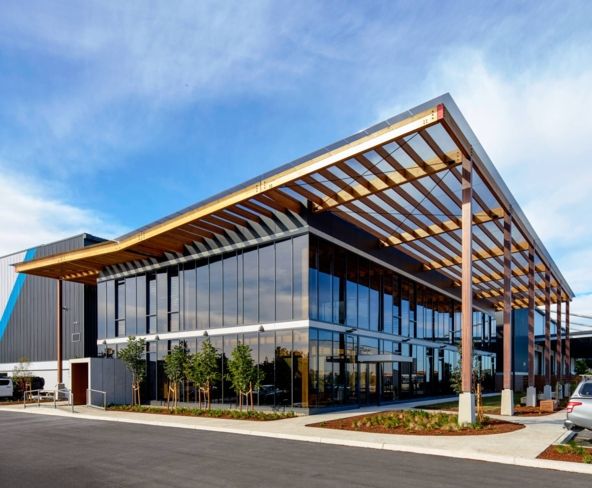
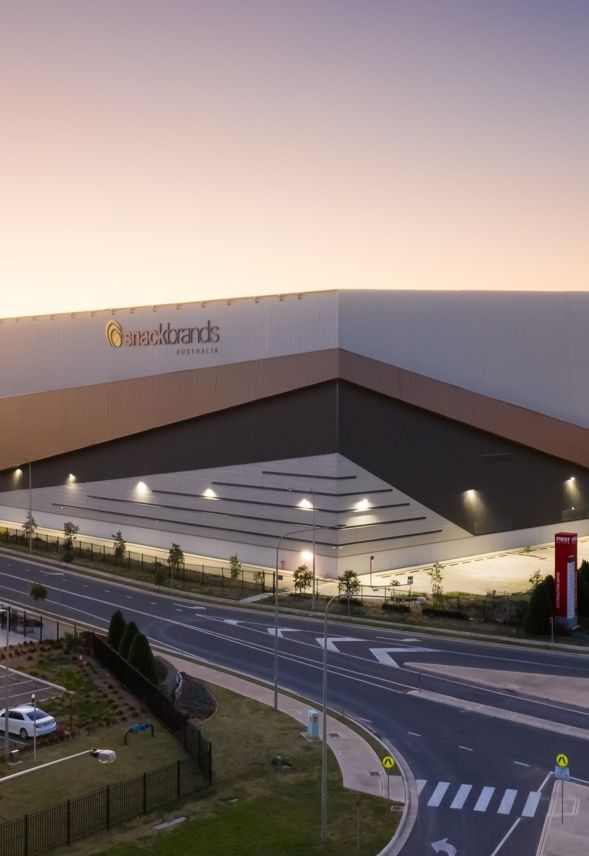
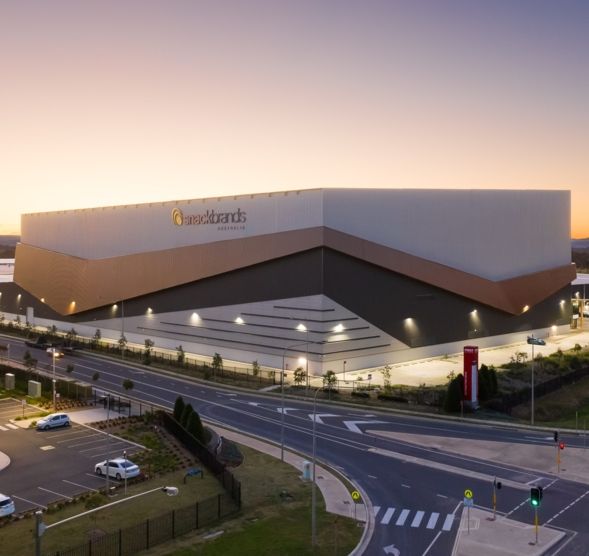
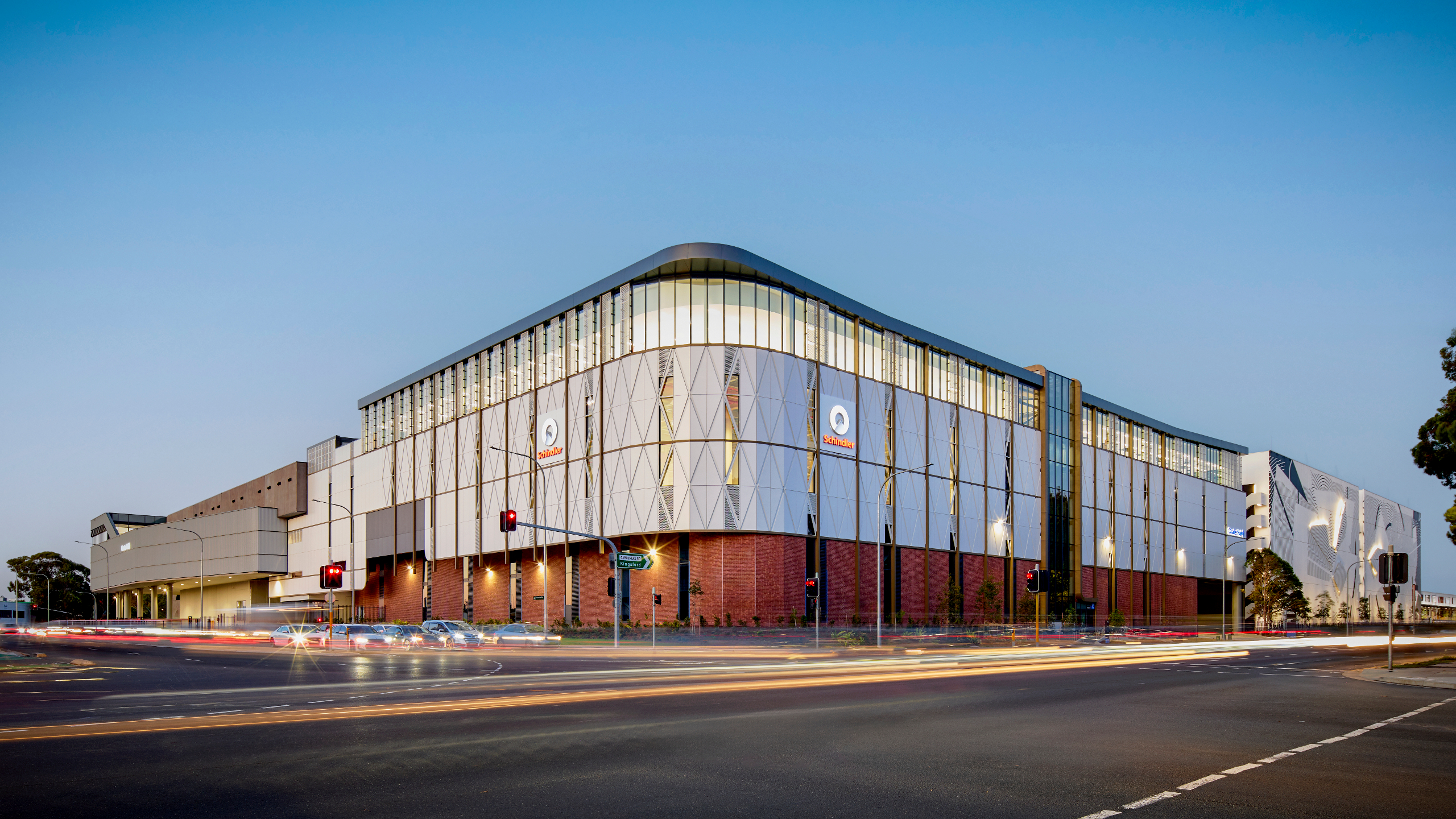
Our masterplanned response to this unique site and concept considered aesthetically driven architectural gestures, while prioritising function and environmental performance to deliver comfortable, attractive and human-centric spaces supported by logistic specific features of high clearance facilities, large single direction flow hardstands, on grade and recessed docks with b-double access.
nettletontribe’s estate masterplan for Charter Hall in Eastern Creek has established the area as an epicentre for food logistics, spanning over 178,000m² across four lots. Strategically positioned at the iconic Light Horse interchange at the junction of the M4 and M7 Motorways, the estate offers direct access to three arterial roads and a population of 4.5 million within a 60-minute drive.
nettletontribe’s vision aimed to attract leading national and international brands by providing CBD-style office spaces in the outer suburbs, complemented by aesthetically driven architectural gestures that prioritise function and environmental performance. This approach delivered comfortable, attractive, and human-centric spaces and successfully attracted large food-based tenants, including HelloFresh and Aldi, with a third base building currently under construction.
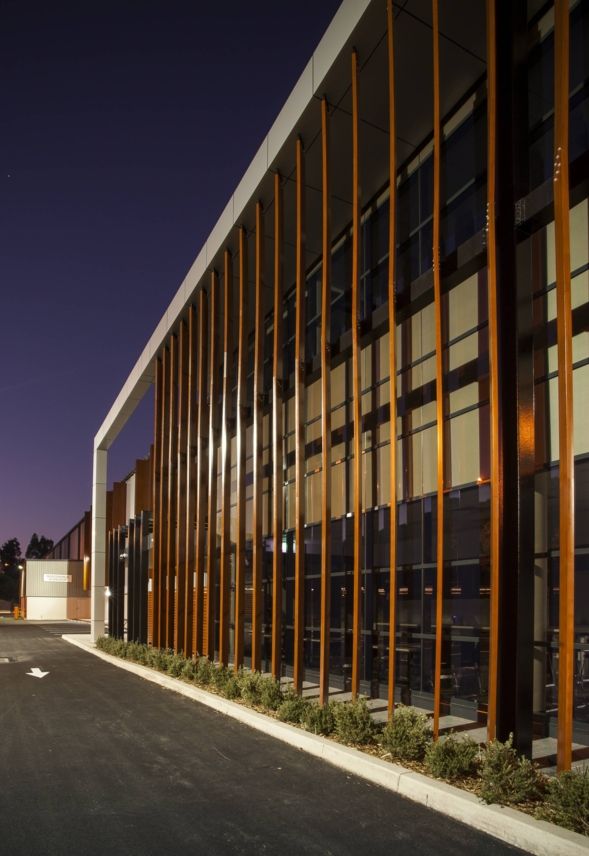
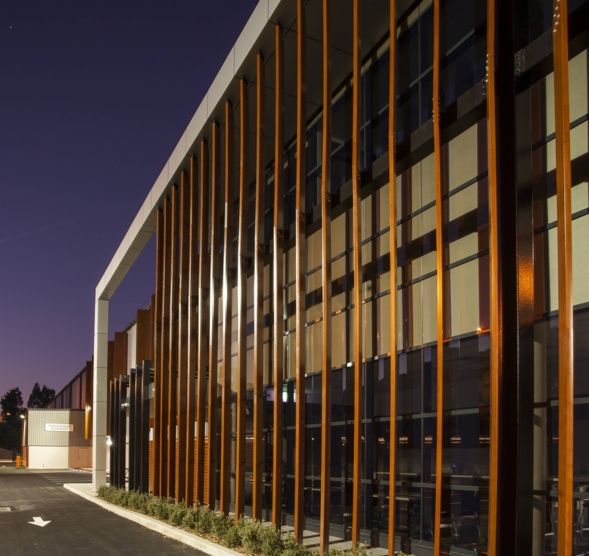
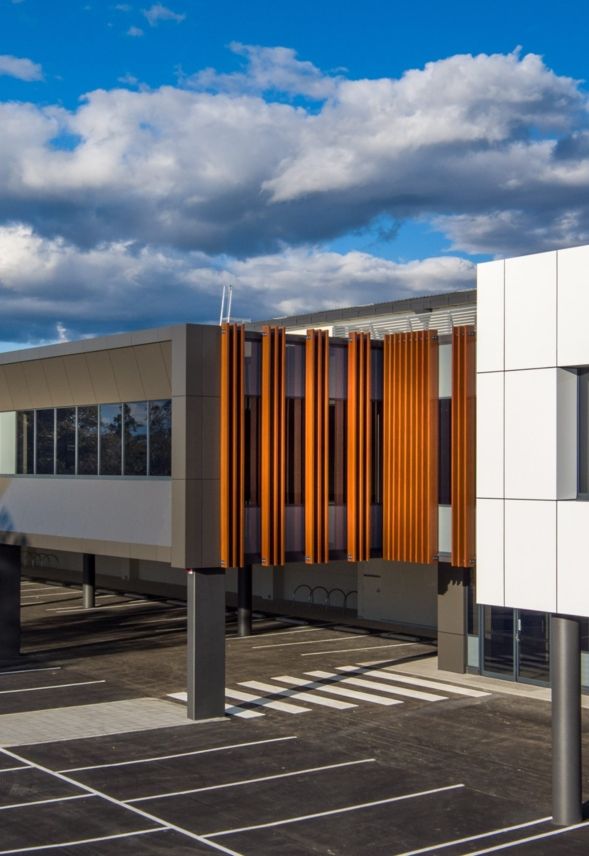
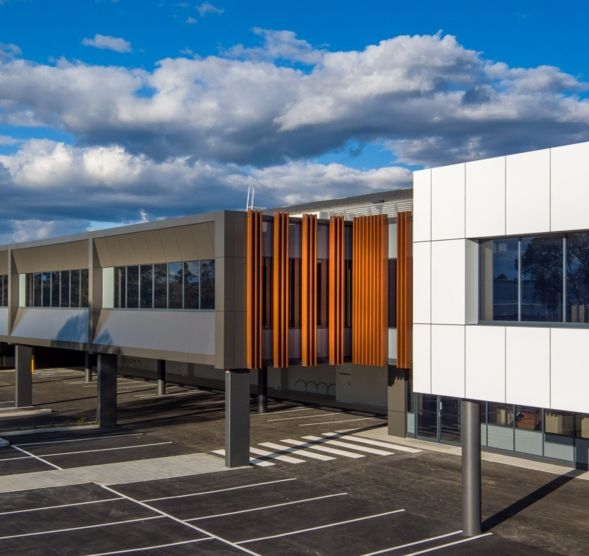
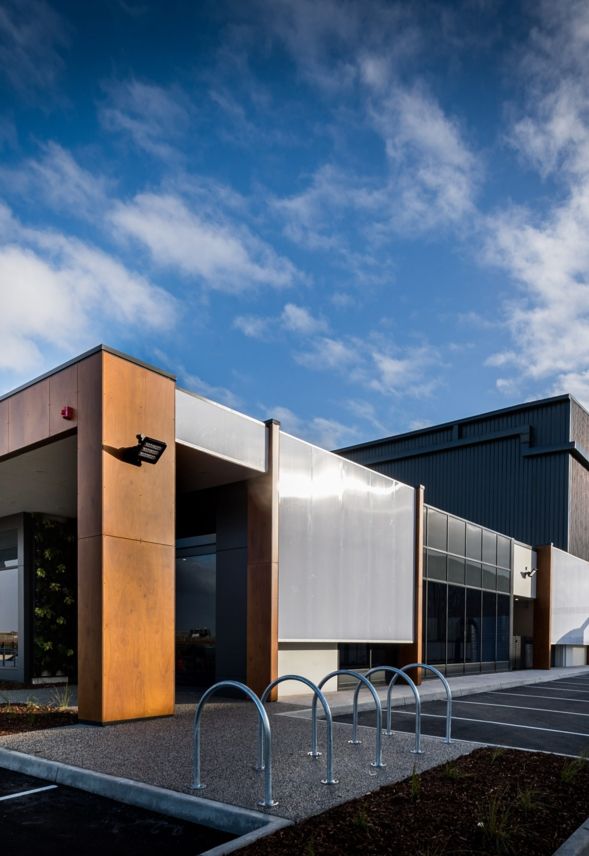
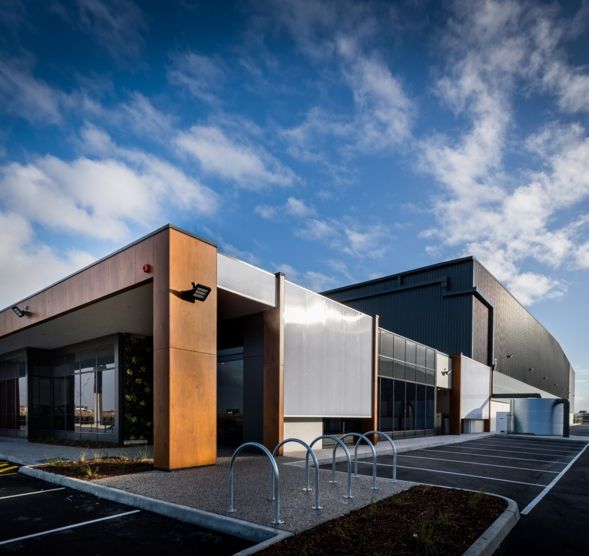
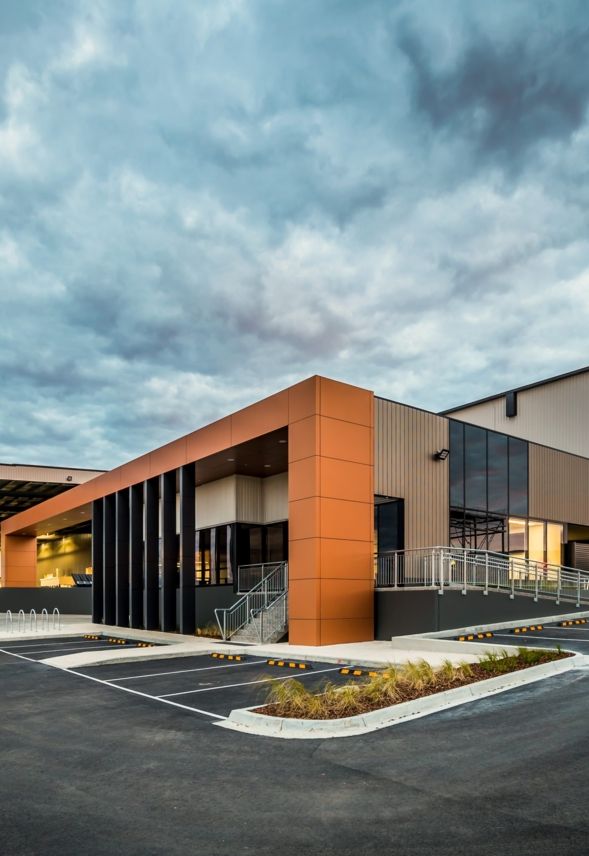
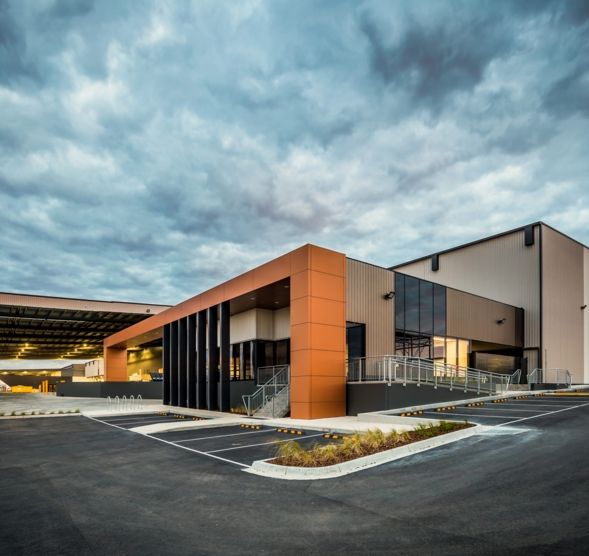
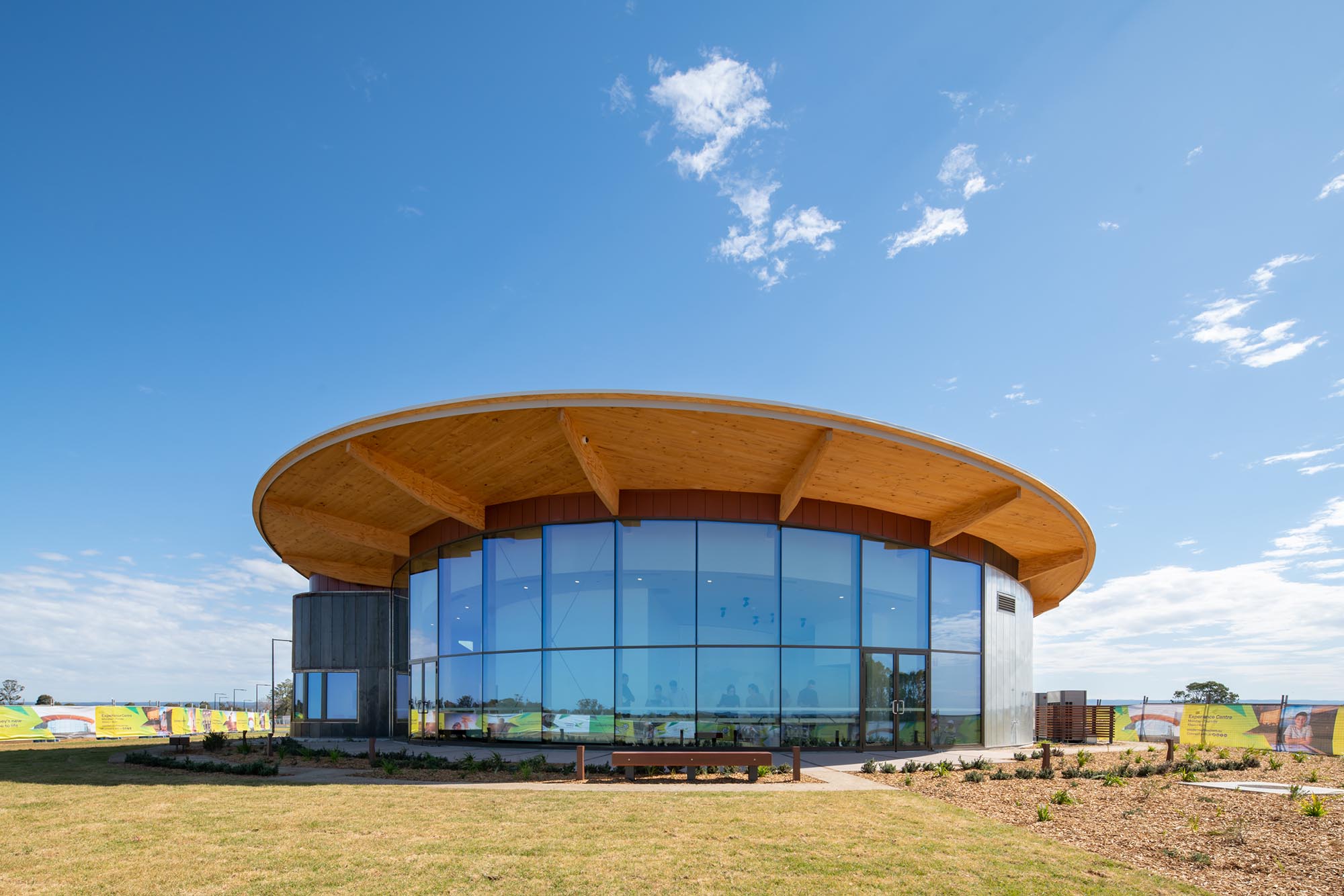
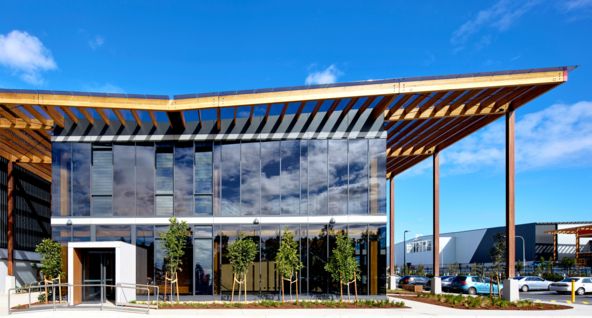
The HelloFresh site is situated at the northern corner of the logistics hub precinct, the timber and glass pavilion-style office building, stands in stark contrast to the adjacent steel-clad warehouses. This northern orientation provides an abundance of natural light and affords the office excellent visibility and clear wayfinding from the street – an integral safety measure to manage interaction between cars and heavy vehicles. Programmatic efficiency is achieved with a direct bridge-link to the warehouse and unobstructed views to the truck hardstand and loading docks.
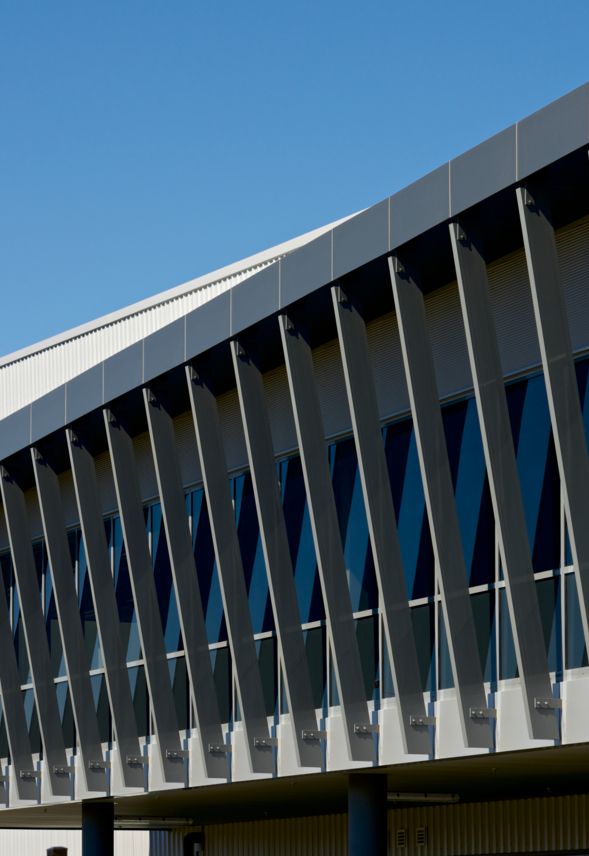
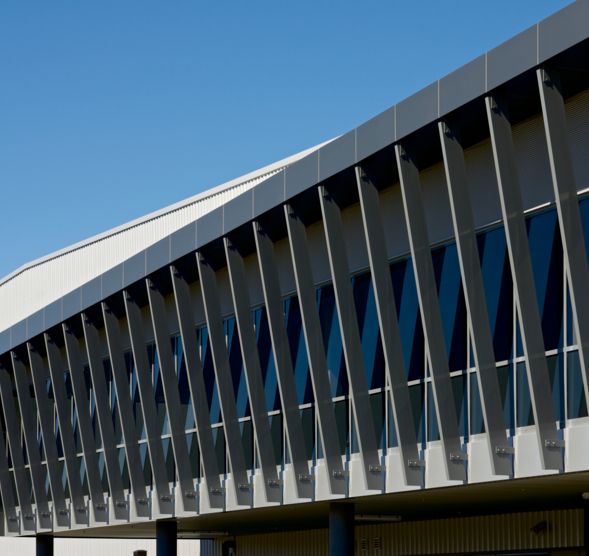
Careful consideration was given to addressing the climatic challenges of the site to provide comfortable workspaces not entirely reliant on electric light and mechanical ventilation. Set in the low undulating grassy plains of outer Sydney, typically hotter and drier than the coastal inner city, the defining architectural feature, a soaring timber-framed butterfly roof, shades the façades, and outdoor recreation spaces, from harsh sunlight. Slender timber supports gently touch down on sculptural concrete plinths set amongst gardens of native shrubs and grasses. Operable glass louvres are positioned capture the prevailing breeze, allowing the building to breathe. These measures provide a comfortable workplace and a reduced operational carbon footprint.
The project’s success hinged on collaborative efforts with various expert consultants, including structural engineers, service consultants, ESD consultants, civil engineers, and mass timber suppliers. This multidisciplinary collaboration was crucial in navigating the complexities of incorporating mass timber, a relatively novel material in the context of industrial construction.
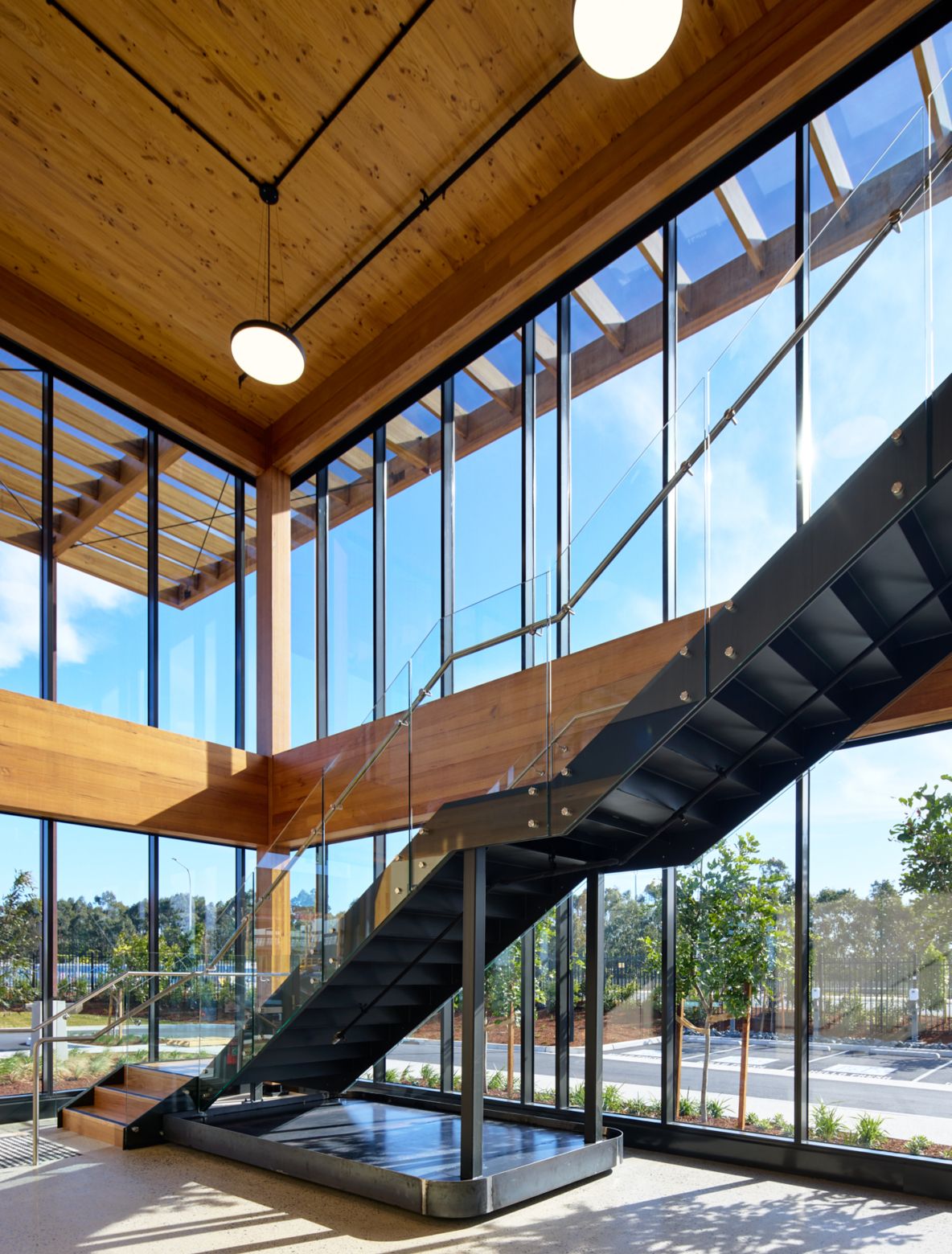
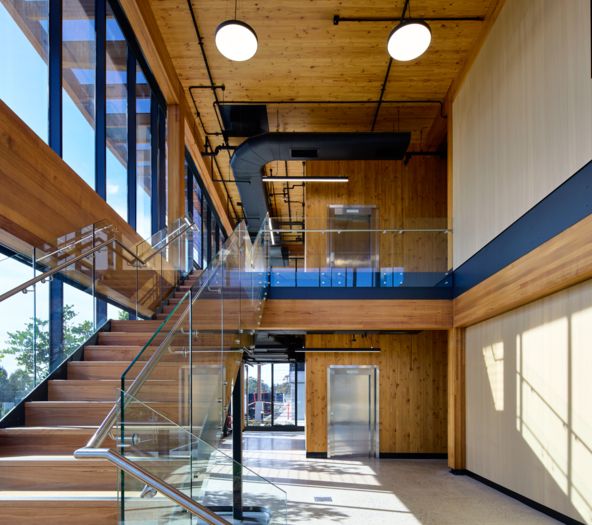
The adoption of renewable mass-timber structure contributes to the project's sustainability and efficiency but also brings a warmth and aesthetic appeal to the workspaces. Mass timber has significantly less embodied carbon than conventional steel and concrete construction. Structural elements were prefabricated facilitating a streamlined construction process with reduced on-site construction waste. Staying true to its industrial essence, the timber structure is also celebrated in the interiors. Unclad timber columns and exposed timber soffits provide a warm, but robust character. Plasterboard ceilings and wall linings are limited to wet areas and acoustically sensitive meeting rooms, further reducing embodied carbon. A double-height entry voids floods the reception with northern light, a robust industrial steel staircase, softened with timber treads, connects the upper and lower levels.
Simple in form, functional in essence and comfortable to inhabit, the Light Horse Logistics Hub stands as an exemplar for outer-suburban workplaces.