




Insights 01: Human-centred design in a fast moving industry
Nash Gonzalvez
Director, Architect
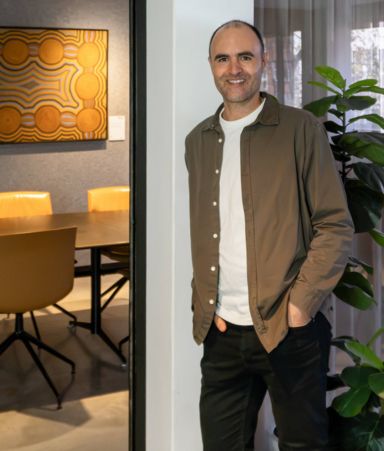
In an industry often driven by speed, compliance, and cost, how do you balance the practical demands of practice with the desire to create architecture that feels meaningful and human?
ㅤ
In an industry often driven by speed, compliance and cost, I think the balance comes from recognising that practical delivery and good architecture are not competing aims, they should reinforce each other. Meaningful architecture needs to be both commercially sound and human-centred: because it needs to work hard in the real world, while feeling considered, generous and enduring.
Clarity right from the outset is important, clarity on purpose, clarity on priorities, and clarity on what will genuinely add value for our clients, our users and the place. When you establish all this early, then design decisions can be made with confidence and discipline, rather than becoming diluted by process.
I see our roles as making complex projects easier, bringing ambition and commercial intelligence together with technical rigour. I like staying closely involved from first sketch through to handover because that hands-on, invested approach gives us the best chance to protect the quality of the design while still responding pragmatically to budget, programme and compliance requirements.
Ultimately, the goal is to design with enough rigour to satisfy the practical demands of delivery, and enough care to ensure the result enriches everyday life. That, to me, is where good architecture becomes truly worthwhile.
Serena Franco
Senior Associate

What has designing across contrasting contexts revealed to you about the emotional and social role of architecture?
ㅤ
Working across contrasting contexts has taught me that architecture has a powerful social role beyond its physical form. It is never just about buildings.
Whether you’re working on a student accommodation project in Sydney or a school in a developing community, people ultimately need the same things: safety, dignity, a sense of belonging, and places that bring them together. While the context may change, the responsibility remains the same.
Good architecture responds to local needs while creating environments that positively shape everyday life and strengthen communities. It’s a reminder that the most meaningful projects are those that put people at the centre of every design decision.
Carol Ke
Associate, Architect

Where do you see the biggest gap between how people live now and how buildings are still being designed?
ㅤ
I think one of the biggest gaps is that people’s lives are changing much faster than our buildings. Hybrid work, ageing populations, evolving family structures and increasing sustainability expectations have all reshaped how we use space, yet many buildings are still designed around assumptions from decades ago.
Too often, we design for the moment a building is completed, as if its “Day One” condition defines its success. In reality, great buildings need to perform across different hours of the day, changing seasons, and over decades of evolving use. That means designing for adaptability, not just completion.
Another challenge is that many of our planning and regulatory frameworks including zoning, daylight, solar access and fire safety requirements, were developed around relatively static, single-use building typologies. While these frameworks play a vital role in protecting safety and amenity, they can also make it difficult to deliver emerging models such as mixed-use communities, co-living and compact urban housing that better reflect how people live today.
Good design isn’t just about creating beautiful buildings, it’s about creating places that are resilient, adaptable and genuinely centred on the people who use them, both today and into the future.
Wells Chen
Associate, Architect

What do you think we need to unlearn about what makes design successful?
ㅤ
That is a brilliant question, and I believe it can be approached from a few different angles.
First, we must unlearn the myth that ‘more complexity equals better design.‘ In my view, complexity usually just breeds chaos. True success lies in restraint. As Coco Chanel beautifully put it, ‘Simplicity is the keynote of all true elegance.’ She famously advised that if something feels wrong with a design, you should try subtracting the last element you added. Striking that balance of simplicity is incredibly difficult, but it is the only way to achieve something timeless, and timelessness is exactly what I pursue.
Second, we need to unlearn the idea that ‘success is measured at completion.’ When you are designing a building, you aren’t creating a disposable product like a smartphone. A building lasts for decades. The day construction finishes aren’t the end of the design; it’s just the beginning.
Our work will be lived in, experienced, and judged for generations. If we want to design successfully for a rapidly changing society, we must stop chasing fleeting trends and start focusing on creating our own enduring style.